A roof tear-off produces one of the heaviest debris streams a homeowner will ever deal with - old asphalt shingles are dense, and a full tear-off down to the deck can weigh far more than most people expect for what looks like a single layer of roofing material. Getting the size and placement right before the crew starts stripping shingles saves a mid-job scramble to order a second container or, worse, a truck that can't legally carry an overloaded load off the property.
Sizing by roof size and number of layers
The two variables that actually matter for sizing are square footage and how many layers of shingles are coming off - not the size of the house. A mid-size roof (roughly 20-25 squares, meaning 2,000-2,500 square feet of roof surface) with a single layer of asphalt shingles is the classic 20 yard job. Step up from there for either variable moving in the wrong direction: more layers, a steeper pitch that adds waste from cutting, or a larger roof all push toward a 30 yard container instead.
If you're not sure how many layers are on your roof, your roofing contractor will know before tear-off starts, and it's worth a quick call to adjust the container size rather than guessing - shingles are heavy enough that an undersized container fills up fast and leaves the crew with nowhere to put the last third of the tear-off.
Timing around storm season
Connecticut's shoreline sees its heaviest roofing demand in two windows: right after a bad nor'easter has taken a toll on roofs across Fairfield County, and in the fall ahead of the next storm season. Roofing contractors book up fast in both windows, and dumpster availability tightens along with it since everyone's scheduling the same week. If you know you need a roof replacement and there isn't storm damage forcing your hand, scheduling outside those peak windows - late spring or midsummer, for instance - generally means easier scheduling for both the roofer and the container delivery. If you are dealing with storm damage, calling early in the process, even before the roofer has a firm start date, helps make sure a container is available for the day tear-off actually begins.
Driveway placement for a roof job
Roofing tear-offs come with a few placement wrinkles that other jobs don't:
- Position for a direct toss, not a carry. Roofing crews strip shingles and throw them, ideally straight off the roof into the container. Placing the dumpster as close to the work area as the driveway allows - directly under or beside the section being torn off - saves the crew from hand-carrying shingles across the yard.
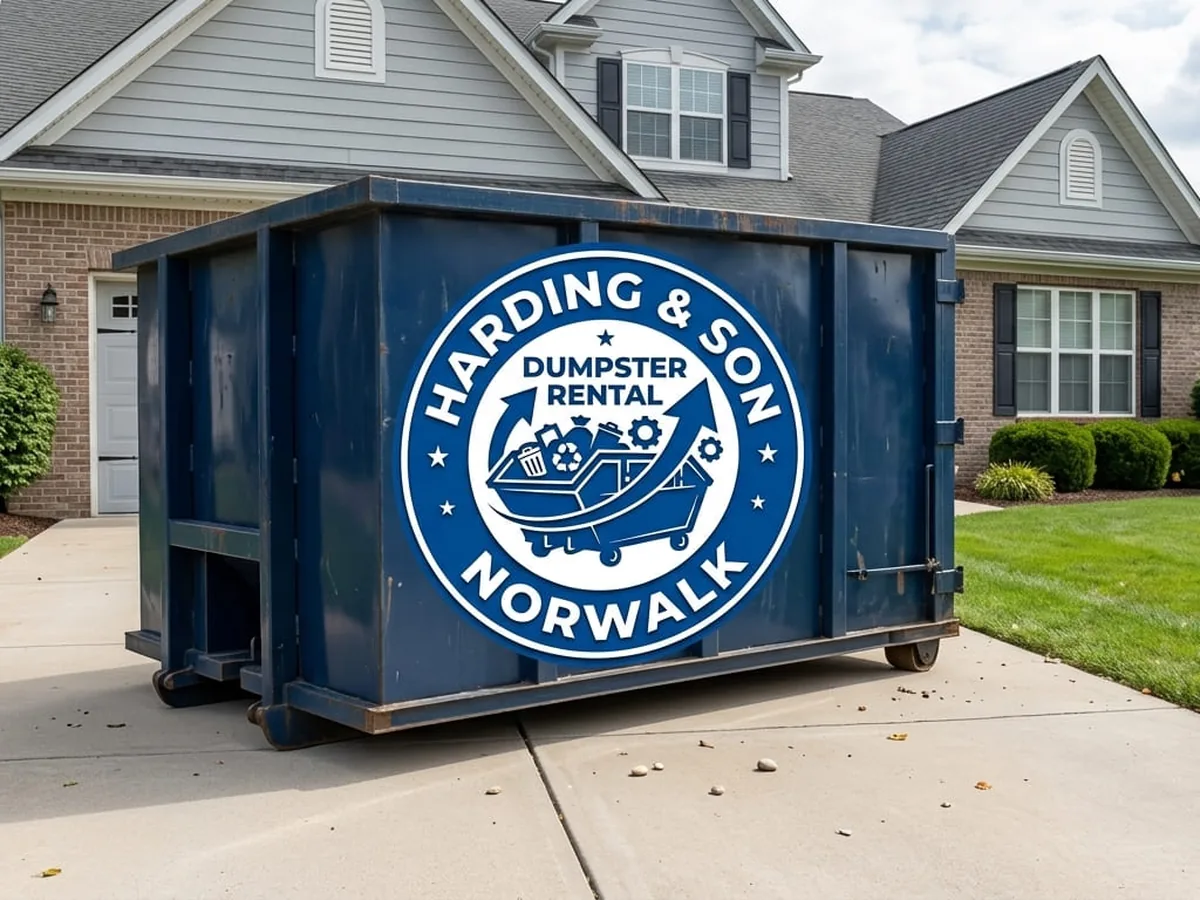
- Protect the driveway surface. Boards go under the container rails as standard practice, which matters even more on a roofing job since the container may sit through a full day or two of heavy loading rather than a slow accumulation over weeks.
- Watch for roof debris fallout beyond the container. Tarps along the drop zone catch stray nails and shingle fragments that miss the container, protecting the driveway and any landscaping nearby - this is a roofer's job to set up, but it's worth confirming before tear-off starts.
- Leave clearance for the pickup truck. A full load of shingles is heavy, and the pickup truck needs the same clear, level approach the delivery truck needed - don't let construction materials or parked vehicles box in the container between drop-off and pickup.
What not to do: overloading above the rail line
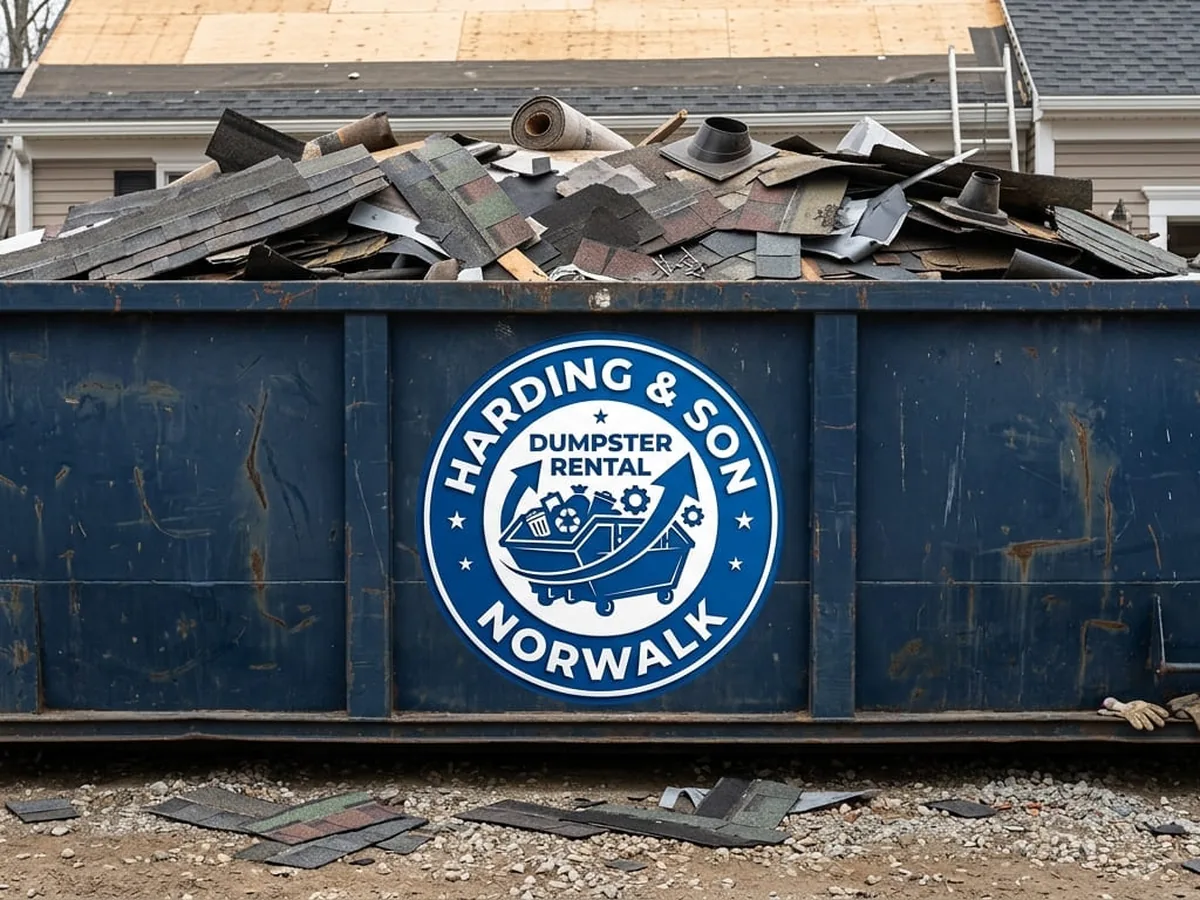
This is the single most common mistake on roofing jobs, and it's a legal weight-limit issue, not just a container-management one. Shingles are so dense that filling a container level with the top rail can already meet or exceed its weight allowance - piling more shingles above the rail line to "get it all in one load" routinely pushes a container over its legal road weight. An overloaded container can't legally be transported, which means it either gets partially unloaded on site before pickup (slow, messy, and nobody wants to do it) or a second container has to be ordered anyway, at extra cost and extra delay. The fix is straightforward: keep shingle debris at or below the rail line and order the right size up front, or plan for a second, smaller container rather than mounding the first one.
A quick pre-tear-off checklist
- Confirm square footage and number of layers with your roofer before ordering a size.
- Schedule delivery for the morning tear-off starts, not a day or two early if driveway space is tight.
- Walk the placement spot for overhead wires and clearance for the delivery truck.
- Ask your roofer to set up tarps along the drop zone for stray nails and fragments.
- Keep shingle loading below the rail line - call for a second container rather than overloading the first.
Same-day and next-day delivery both work for a scheduled roof job - Norwalk, Westport, and Darien are generally same-day, and inland towns like Ridgefield, Wilton, and Bethel are usually next-day. Call (475) 242-2874 with your roof size and layer count and we'll get the right size on site before your roofer's crew shows up.
Coordinating the container with your roofing contractor
Most roofing contractors in this area have worked with roll-off dumpsters on plenty of jobs and will often tell you exactly what size they prefer, since they know their own crew's pace and how much waste a given tear-off generates. It's worth asking your roofer directly if they have a preference before you call to order - a contractor who's torn off three layers of cedar shake on a steep Rowayton roof knows something a general size chart doesn't capture. When the roofer and the container size are aligned before the job starts, there's no mid-tear-off pause while someone figures out whether the container will hold the rest of the load.
It also helps to confirm who's handling delivery-day logistics - whether the homeowner or the roofing crew will be on site to direct placement, since the crew will know exactly where they want the container relative to ladders, chutes, or wherever they're planning to stage material during the tear-off.
Multi-layer tear-offs and older homes
Older homes in Norwalk, East Norwalk, and other established neighborhoods sometimes carry two or even three layers of shingles from decades of roof-overs rather than full tear-offs. Before assuming a single-layer size will work, it's worth having the roofer confirm layer count during the initial inspection, not after tear-off has started and the container is already filling faster than expected. A home built before the 1980s is more likely to have multiple layers than a newer build, simply because roofing-over an existing layer used to be more common practice than it is today.
Complex rooflines - dormers, multiple valleys, a steep pitch - also generate more waste per square foot than a simple gable roof, since cutting shingles to fit odd angles produces more scrap. If your home has an architecturally complex roof, it's reasonable to size up one step from what the square footage alone would suggest.
What happens to the old shingles
Once shingles leave the property, most loads go to a transfer facility or landfill, though in some cases asphalt shingles can be recycled into paving material depending on what's accepted locally at a given time. This isn't something to count on for a specific job, but it's worth knowing that shingle debris isn't automatically a dead end - facilities and programs in Fairfield County do shift over time as recycling markets change.