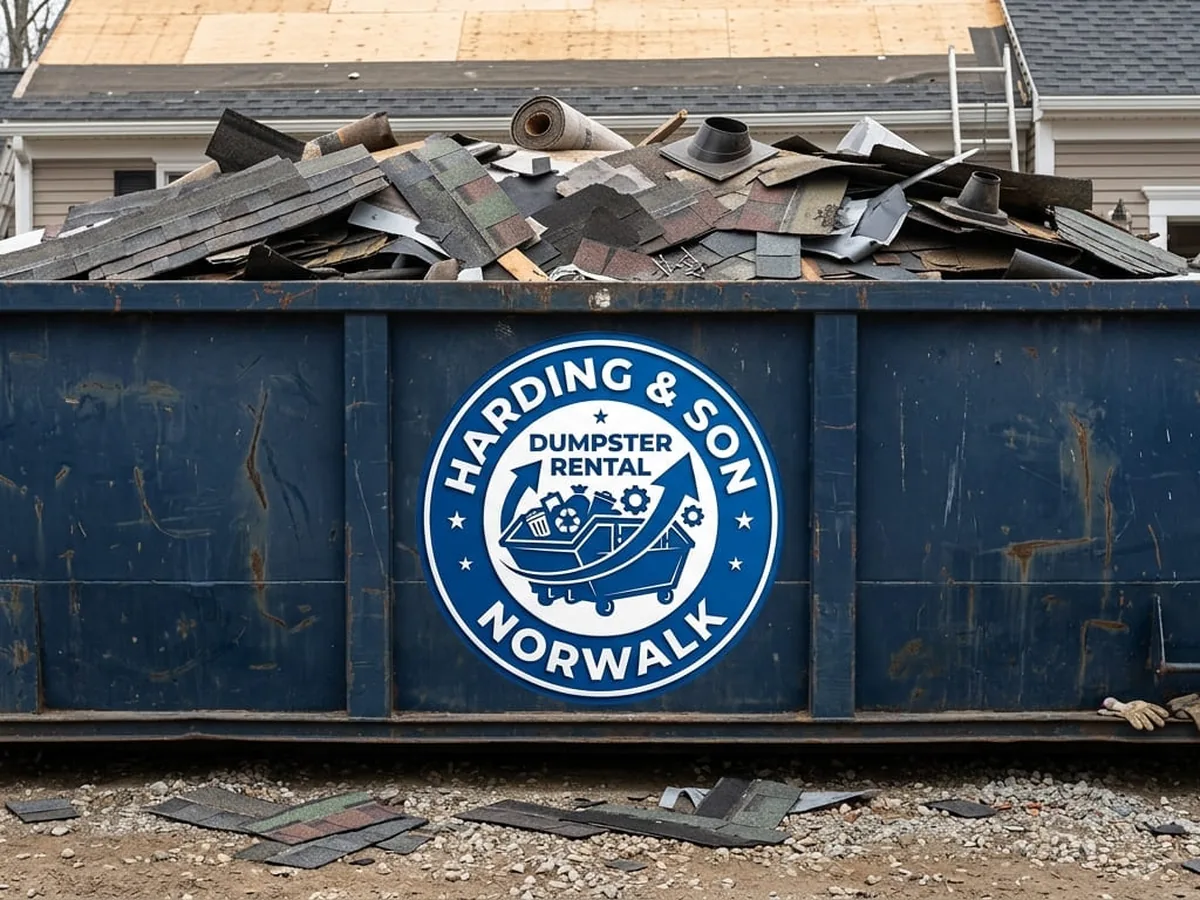
Roof Replacement Dumpster Checklist for Norwalk Homeowners
Shingles are heavier than they look - here's how to size a dumpster by roof square footage and layer count, time it around storm season, and avoid the most common overloading mistake.
ReadConstruction & Contractors guide
New construction debris changes character from foundation to finish work - here's how to size and schedule roll-off swaps by phase, and what's different about tight coastal lots versus inland acreage.
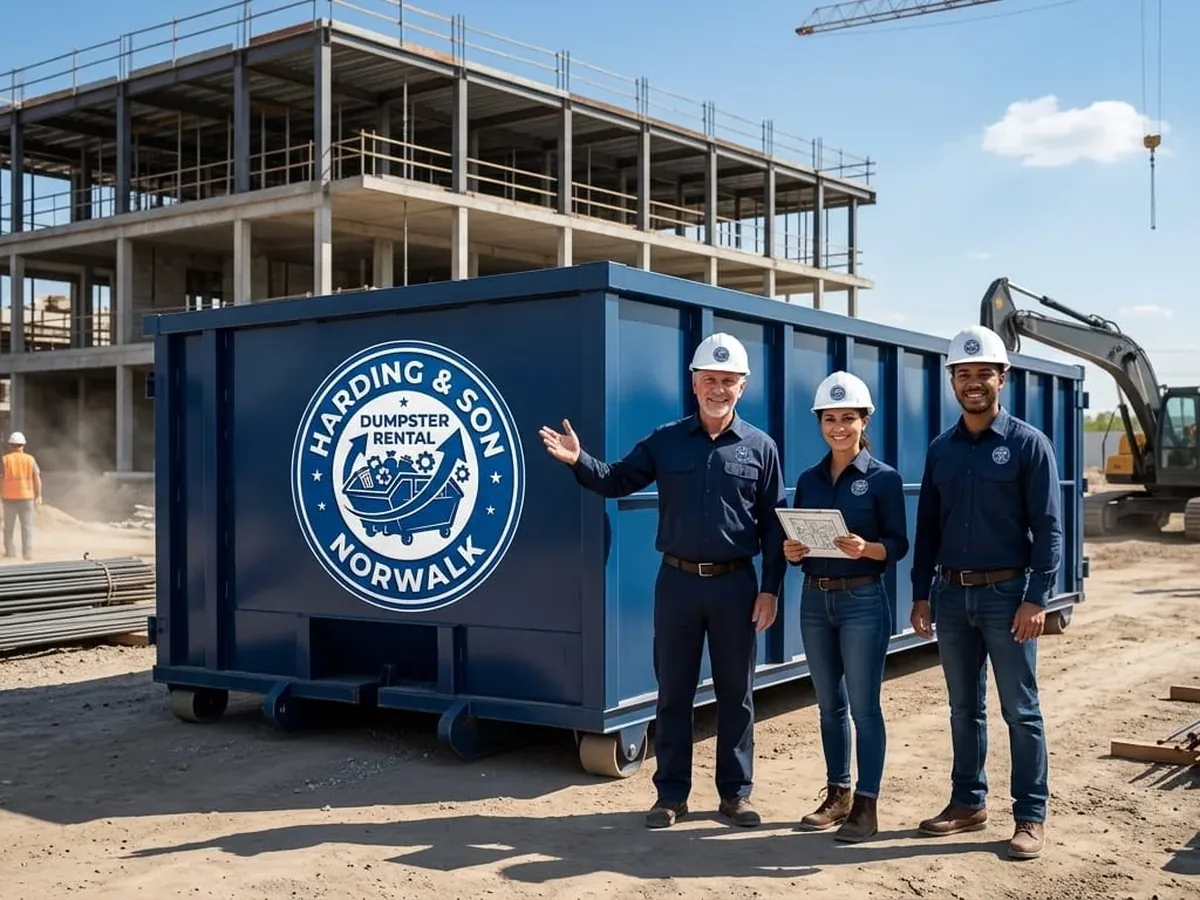
New construction and major additions generate debris in waves, not one steady stream, and the waste stream itself changes character as a project moves from foundation to framing to finishing. Anyone who's tried to run a single dumpster size through an entire build in Norwalk or the surrounding towns knows the frustration: the container that was perfect for framing offcuts turns into a bottleneck during drywall and finish work, or it fills with concrete rubble so fast it's maxed out on weight before it's half full by volume. Matching the container to the phase of the job saves money and keeps the site moving.
Framing generates a lot of volume and not much weight: lumber offcuts, sheathing scraps, packaging from windows and trusses, and the occasional bent stud or damaged piece of engineered lumber. This stuff is bulky but light, so a 20 or 30 yard container that fills up visually before it's heavy is normal and fine.
Drywall, finish, and interior trim work flip that ratio. Drywall scraps, joint compound buckets, flooring underlayment, and packaging from cabinets and fixtures take up less visual space but drywall in particular is dense - a container that looks half full of drywall cutoffs can already carry serious tonnage. This is the phase where contractors most often get surprised by overage charges because they're used to judging "how full" a container is by eye rather than by what's actually in it.
Concrete, masonry, and foundation work are their own category entirely and deserve their own container. Concrete, brick, and block are so dense that a standard-size roll-off filled even partway with masonry debris can hit its weight limit long before it's visually full. If your project includes a torn-out driveway, an old foundation, or a masonry chimney demo, it's worth asking for a dedicated container sized and priced for heavy material rather than mixing it into the general construction debris load.
| Phase | Typical debris | Suggested size |
|---|---|---|
| Site prep / demo | Old structure, foundation debris, mixed C&D | 30-40 yard |
| Framing | Lumber, sheathing, packaging | 20-30 yard |
| Concrete / masonry only | Concrete, brick, block | 10-15 yard (heavy-debris load) |
| Drywall / insulation / interior | Drywall scraps, insulation, flooring | 15-20 yard |
| Finish / punch list | Trim scraps, packaging, small volume mixed debris | 10-15 yard |
For a full new-build from foundation to move-in, most contractors end up running two or three different containers in sequence rather than one size for the whole job - which is normal, and something we can schedule as a set of planned swaps rather than a series of separate one-off calls.
An active jobsite has a rhythm, and dumpster swaps need to fit into it rather than disrupt it. A few things that make swap-outs go smoothly:
Norwalk, Westport, and Darien lots tend to run tighter, especially in older neighborhoods like SoNo or East Norwalk where homes sit closer to the street and to each other. On these jobs, placement often means using part of the street (which may require a permit from the City of Norwalk or the relevant town) or getting creative with a container angled across a narrow driveway. It's worth walking the site and talking through placement before delivery day rather than discovering on delivery day that the only flat, accessible spot is blocked by a fence or a low utility line.
Inland towns like Wilton, Ridgefield, Redding, and Weston generally have more room to work with - longer driveways, more yard space, fewer tight setbacks - which makes placement simpler but doesn't eliminate the need to check for overhead wires or soft ground that could rut under a loaded container. New construction and major additions in these towns often run larger containers longer, since there's usually room to keep one on site for weeks at a time without it being in anyone's way.
Keeping concrete, scrap metal, and clean wood debris separated when it's practical to do so helps on cost, since clean concrete and scrap metal are sorted for recovery where possible rather than treated as standard landfill-bound debris. It's not a requirement, just a habit that pays off. And because pricing here is flat-rate - one number covering delivery, the rental period, pickup, and disposal up to a stated tonnage allowance - describing the phase and the general debris mix when you call means the quote reflects what's actually going in the container instead of guessing and running into overage charges mid-project.
On jobs run by a general contractor, dumpster scheduling is usually one more line item the GC manages alongside subcontractor scheduling, permit timing, and material deliveries - in which case it helps to loop us in early on the overall project timeline so swap dates can be planned around the framing, drywall, and finish milestones the GC is already tracking, rather than reacting to a full container as a surprise.
Homeowner-managed additions and smaller projects, where the homeowner is coordinating trades directly, tend to run on a looser schedule with more gaps between phases. That's fine too - a single container can often sit longer between swaps on these jobs since the pace of work is slower, and it's easier to judge fullness by checking in person rather than trying to track it against a tight GC schedule.
Either way, a phone call describing roughly where the project stands - foundation poured, framing underway, drywall starting next week - gives us enough to recommend both the right size and a reasonable window for the next swap, instead of guessing blind.
If a container needs to sit in the street rather than on the property - common on tight coastal lots where the driveway can't accommodate both a roll-off and active construction traffic - check with the City of Norwalk or the relevant town before delivery day. Street placement typically requires a permit, and timing that paperwork to be in hand before the container arrives avoids a delay on delivery morning. Inland towns with longer driveways rarely run into this, since there's usually enough room to keep the container fully on the property for the length of the project.
For sequencing multiple swaps across a build, call (475) 242-2874 and we can plan sizes around your actual schedule rather than one-size-fits-all.
Talk to a real person
Call (475) 242-2874 and describe the job. Flat price, stated tonnage allowance, and a delivery window on the same call.
Mon–Sat 7:00am – 7:00pm
From this guide
It's a good idea. Concrete and masonry are dense enough that a standard container filled even partway with them can hit its weight limit long before it looks full. A dedicated, appropriately sized container for concrete and masonry debris avoids overage charges compared to mixing it into general framing debris.
Most full builds from foundation to move-in use two or three different container sizes in sequence rather than one size for the whole project - typically a larger container for demo and framing, then a smaller one for drywall and finish work.
Yes, though tighter coastal lots sometimes require using part of the street, which may need a permit from the City of Norwalk. It's worth walking the site and discussing placement before delivery day on any lot with a narrow driveway or close-set neighboring homes.
The cleanest swaps happen at natural trade transitions - for example, after framing wraps up and before drywall starts. Call ahead of active-site days like concrete pours or crane work so a scheduled swap doesn't collide with something already happening on site.
Pricing is flat-rate and covers delivery, the rental period, pickup, and disposal up to a stated tonnage allowance regardless of town. Same-day delivery is realistic for Norwalk, Westport, and Darien; farther inland towns like Ridgefield and Redding are usually next-day.
Keep reading
Shingles are heavier than they look - here's how to size a dumpster by roof square footage and layer count, time it around storm season, and avoid the most common overloading mistake.
ReadClearing a home after a loss or a move doesn't have to be rushed - here's how to sort keepsakes and donations first, size a container for a full house, and what needs to be set aside before it goes in the dumpster.
ReadVolume and weight are two separate limits on any roll-off dumpster. Here's how to match a size to your Norwalk-area project without overpaying or running out of room.
Read